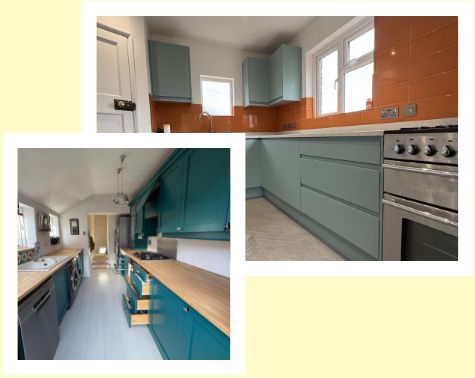
How Much Does It Cost to Respray a Kitchen in Brighton?
How Much Does It Cost to Respray a Kitchen in Brighton?
A Practical Guide for Homeowners
Respraying your kitchen is one of the most cost‑effective ways to transform your space without the expense and disruption of a full replacement. A professionally sprayed finish can make dated cabinets look fresh and new, transform the feel of the room, and add real value to your home.
This guide breaks down typical costs and the main factors that influence them, so you can plan with confidence.
Typical Cost Range for Kitchen Respraying
Most professionally resprayed kitchens fall between £1,000 and £4,000, depending on size, condition and chosen finish.
As a rough guide:
- Small kitchen (8–12 doors): £1,000 – £1,800
- Medium kitchen (13–20 doors): £1,800 – £2,800
- Large kitchen (21–30+ doors): £2,800 – £4,000+
These figures usually include the full process needed to achieve a durable, smooth finish: preparation, priming, spraying and reinstallation.
Smaller kitchens with fewer doors sit at the lower end of the range, while larger or more complex layouts with islands, tall units or extra panels naturally cost more.
What Affects the Cost of a Kitchen Respray?
Several factors influence the final price of a kitchen respray. Understanding these helps you compare quotes fairly and avoid surprises.
1.| The Number of Doors and Drawers
This is often the single biggest driver of cost. Each door and drawer front needs to be removed, cleaned, prepped, primed, sprayed, cured and reinstalled.
A simple rule of thumb applies: more doors = more time = higher cost.
If you’re counting up your own kitchen, include all doors, drawer fronts, tall units and integrated fronts (like dishwasher panels) to get a realistic picture.
2.| The Condition of Your Existing Cabinets
Preparation is everything. A flawless finish starts long before the spray gun comes out.
Your price may increase if your cabinets need:
- Extra cleaning to remove built‑up grease
- Repairs to dents, chips or peeling laminate / vinyl wrap
- Additional sanding or filling
- Specialist primers for tricky or damaged surfaces
- Tannin‑blocking coatings for natural wooden kitchens to prevent staining and discolouration bleeding through the finish
- Well‑kept, solid cabinets will be quicker to prep and therefore cheaper than units with heavy wear, water damage or failing coatings.
3.| The Type of Material
Different materials require different preparation and product systems:
- Solid wood is generally straightforward to prep and takes paint beautifully. However it may need tannin‑blocking primers as above to control natural staining.
- MDF gives a very smooth finish but needs careful sealing to avoid swelling or fibre “raising”.
- Laminate or vinyl‑wrapped doors may need specialist primers and repair work, especially if they’re peeling or lifting.
More complex materials and problem surfaces require extra time, products and expertise, which will be reflected in the price.
3.| The Finish You Choose
Your chosen finish affects both materials and labour.
Typical options include:
- Matt – smooth, modern and forgiving of minor imperfections.
- Satin – the most popular choice; durable with a soft sheen that’s easy to live with.
- Gloss – striking and reflective, but it shows every flaw and demands impeccable preparation.
Gloss finishes often cost more because the prep needs to be meticulous and additional coats may be required to achieve a perfectly even sheen.
4.| Colour Choice
Most colours fall within standard pricing, but some specialist shades or multi‑coat systems can increase the cost slightly. Dark colours, for example, may require extra coats to achieve full, even coverage.
If you’re moving from very dark to very light (or vice versa), your sprayer may recommend specific primers or additional coats, which can nudge the price upwards.
5.|Whether You Want the Inside of the Cabinets Sprayed
Most homeowners choose to spray only the exteriors, frames and doors, as the inside of the cabinets is rarely visible when the doors are closed.
Spraying the interiors adds:
- More surfaces to prepare
- Extra masking and protection
- Additional product and labour
Expect the overall cost to rise if you decide you’d like the insides sprayed as well.
6.| Additional Items, Fixed Parts and Handle Changes
Extras such as:
- Cornices and pelmets
- End panels and gable ends
- Plinths and kickboards
- Open shelving and wine racks
Integrated handle profiles
All add to the total because they require the same level of preparation and spraying as the doors and drawer fronts.
In most kitchens, these fixed parts account for around 15–25% of the total work, so it’s important to include them when you’re estimating or comparing quotes rather than counting doors alone.
Handle changes are also worth factoring in. Replacing like‑for‑like handles (same fixing points) is usually a simple, low‑cost add‑on.
Changing handle style or position (for example, from knobs to longer bars, or drilling new holes) involves filling and refinishing the old holes before spraying, plus fitting the new hardware – adding extra labour and materials.
Updating handles at the same time as a respray is a smart way to complete the transformation. But, it will sit on top of the spraying price, depending on the type and number of handles you choose.
7.| Location and Access
Practical factors like access and parking can influence the time needed for setup, protection and moving doors to and from a spray area.
If your kitchen is awkward to access, on an upper floor with limited parking, or in a very tight space, professionals will factor this into the quote to allow enough time to do the job properly and safely.
A Simple Framework to Estimate Your Kitchen Respray Cost
Before you start gathering quotes, you can use this framework to work out a realistic ballpark figure for your kitchen respray.
Step 1| Count Your Doors and Drawers
This gives you your baseline.
Use this guide:
- £80–£120 per door
- £40–£60 per drawer front
Multiply these by your total number of doors and drawers to get a starting figure.
Step 2| Add 15–25% for Panels and Extras
Most kitchens have end panels, cornices, pelmets, plinths, open shelving or integrated trim. These fixed parts typically make up around 15–25% of the overall work. So add 15–25% to your baseline to allow for these.
Doors & drawers total + 15–25% for panels and extras.
Step 3| Add 10–30% for Condition and Material
If your kitchen is:
- Particularly greasy or heavily used
- Damaged, chipped or peeling
- Made from more complex materials such as laminate or vinyl wrap
- A natural timber kitchen likely to need tannin‑blocking coatings
Then you’ll need to factor in extra preparation time and specialist primers.
Add 10–30% depending on how much work you can see will be needed.
Step 4| Consider Your Finish
- Matt or satin: usually no change to the estimate.
- Gloss: add around 15–20% to allow for extra preparation and coats.
Step 5| Decide Whether You Want the Interiors Done
If you’d like the inside of the cabinets sprayed as well as the outsides, add £300–£600 depending on the size and complexity of your kitchen.
Step 6| Factor in Handle Replacement or Swaps
If you’re planning to:
- Replace existing handles with new ones of the same size and fixing points, allow a small extra amount for fitting.
- Change handle style, size or position (new holes, filling old ones), expect additional labour for filling, sanding and re‑drilling before spraying, plus the cost of the new hardware itself.
For many homeowners, new handles are a worthwhile extra that completes the “new kitchen” look without the cost of replacement units.
This framework gives you a realistic starting point so you know what to expect when you start speaking to specialists. You’ll still need to get professional quotes for the work.
Are Kitchen Resprays Cost‑Effective?
Yes. Respraying your kitchen is one of the most cost‑effective ways to refresh your home. With the right preparation, products and expertise, you can achieve a durable, factory‑smooth finish that looks brand new. Without the price tag, disruption and waste of a full replacement.
For many homeowners, a kitchen respray unlocks the look and feel of a new kitchen at a fraction of the cost, while keeping solid existing cabinetry in use for years to come. Check out Things to Consider When Respraying Your Kitchen »
The Bees Knees Decorating Approach
At Bees Knees Decorating, we specialise in kitchen cabinet respraying and interior spray finishes across Brighton, Hove and Sussex, and we’re always happy to provide clear, itemised quotes so you can see exactly what’s included – from doors, panels and fixed parts to any handle changes you’re considering.
If you’d like help working out the cost of respraying your own kitchen – based on your doors, layout, condition, materials and hardware – you can share a few photos or arrange a site visit, and we’ll talk you through the options.
Check out our reviews on Google, Facebook and Yell.



WHY CHOOSE US
We pride ourselves on being polite, respectful, friendly & considerate. We offer:
 Top class workmanship Professional, dependable, reliable service Great communication from start to finish Qualified in both traditional painting and decorating methods and the latest technologies Public Liability Insurance, City & Guilds Accredited, CITB registered